

Message form the Chairman
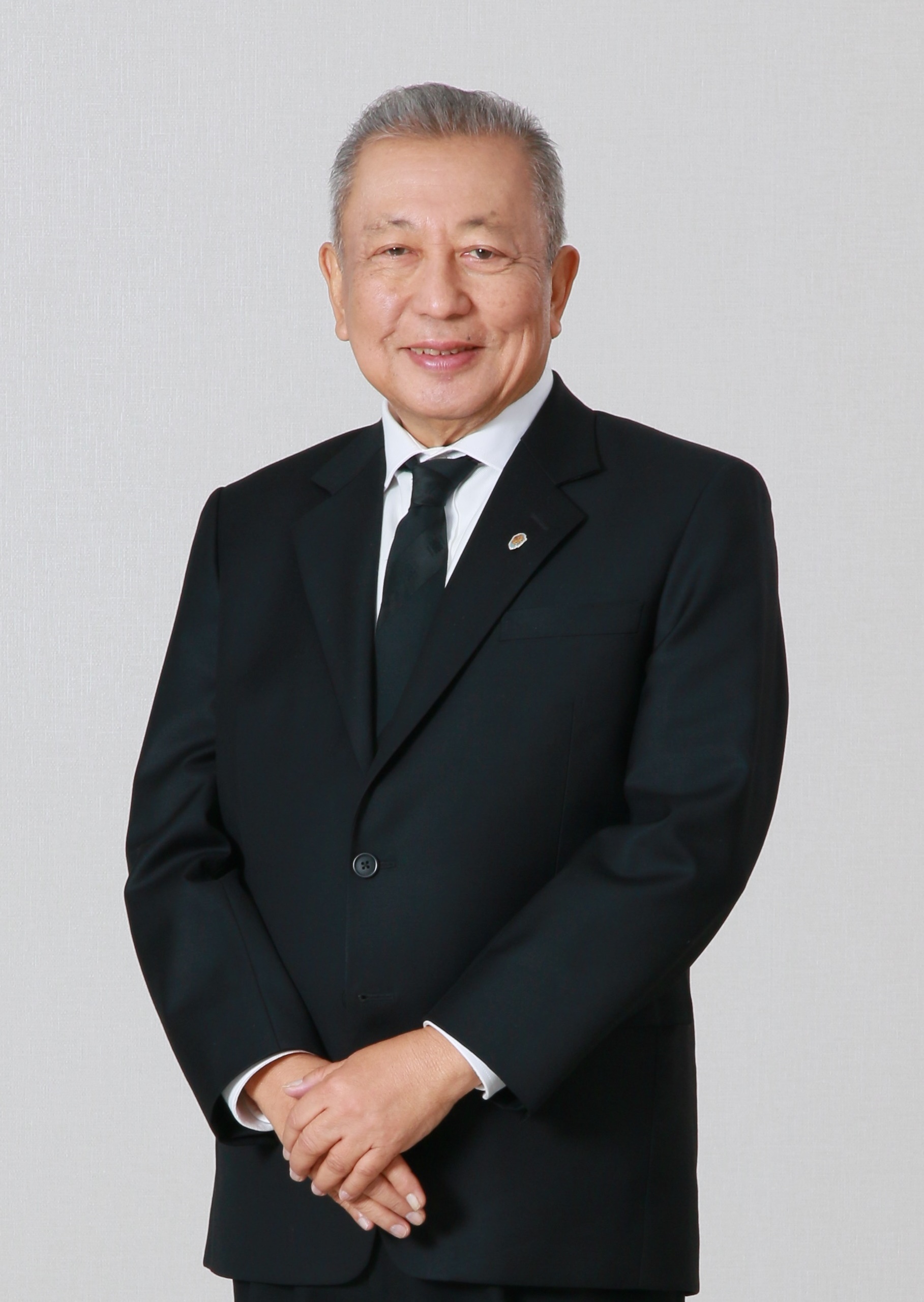 Dr. Chumpol Phornprapha
Chairman
Dear Shareholders,
In 2025, the Thai economy and the global economy continue to face both challenges and opportunities. This is set against the backdrop of a gradual recovery of the world economy following the turbulence caused by the COVID-19 pandemic, geopolitical conflicts, and persistently high inflation in recent years. Nevertheless, the overall global economic outlook has become more stable, supported by more accommodative monetary policies in several major countries and the adaptation of businesses to align with the structure of the modern economy.Thai economy in 2025 grew by 2.4%, slightly lower than the 2.5% growth recorded in 2024. This slowdown was mainly due to the impact in the second half of the year from a decline in tourist arrivals, border conflicts between Thailand and Cambodia, and flooding in the southern region, although the government introduced several stimulus measures in 2025, such as the Khon La Khrueng co-payment scheme and cash handouts for people with disabilities and holders of state welfare cards, domestic spending remained subdued. Household consumption, in particular, was constrained by high household debt burdens and uneven income recovery. Nevertheless, Thailand’s economy continued to be supported by key drivers: tourism, investment from both the public and private sectors, and exports. These factors contributed to a significant improvement in service sector income. The number of international tourists stood at 32.9 million, a 7.2% decline from 2024. This marked the first drop in four years, with tourism revenue totaling 1.53 trillion baht, down 4.7% from 2024. On the investment side, the government continued to play a key role through infrastructure projects and the promotion of targeted industries (New S-Curve). Meanwhile, private sector investment began to recover. Foreign direct investment in Thailand in 2025 reached 324 billion baht, the highest in five years, and 42% higher than in 2024, particularly in industries linked to regional supply chains, production relocation, and technology and innovation driven sectors. In 2025, Thailand’s total export value reached USD 340 billion, representing an expansion of 12.9% compared to 2024. This marked the highest export level on record, driven primarily by accelerated shipments amid uncertainties surrounding the United States’ reciprocal tariff measures and increasing signs of uncertainties in international trade policies.
In terms of monetary policy, policy interest rates of major economies worldwide are beginning to trend downward to support economic growth and reduce the financial burden on businesses and households. By 2025, the US Federal Reserve cut its policy interest rate a total of three times throughout the year, by a total of 75 basis points (bps), from 4.25% - 4.50% at the end of 2024 to 3.50% - 3.75% at the end of 2025, the lowest level in three years. The European Central Bank (EU) has kept its benchmark interest rate at 2.0% at the end of 2025, after eight consecutive cuts. As for the Bank of Thailand, it cut its policy interest rate four times in 2025, by a total of 100 basis points, from 2.25% at the end of 2024 to 1.25% at the end of 2025, to stimulate the economy which has slowed due to declining consumption and the impact on the slow down of the thai economy in the second half of the year.
In 2025, the hire purchase and retail lending industry continued to face challenges from persistently high household debt levels and increasingly stringent regulatory requirements. This follows the enactment of the Royal Decree prescribing that automobile and motorcycle hire purchase and leasing businesses be subject to the Financial Institutions Business Act B.E. 2551 (2008), B.E. 2568 (2025), which became effective on December 3, 2025. In addition, the regulations, conditions, and supervisory measures governing hire-purchase and leasing businesses issued by the Bank of Thailand, including the Responsible Lending guidelines, sustainable household debt resolution measures, and the interest rate and fee ceilings, will be strictly enforced beginning June 1, 2026. These developments require companies to exercise greater prudence in credit approval processes and debt collection practices, which may affect the future growth of the hire purchase business.
In 2025, motorcycle market sales totaled 1,735,366 units, increasing by 1.6%, marking a return to growth after a contraction in the previous year. Meanwhile, automobile market sales reached 621,166 units, rising by 8.5%, the first expansion after two consecutive years of decline. The company remains committed to prudent risk management policies, prioritizing credit quality over quantitative expansion. Operational processes have been adjusted to comply with regulatory requirements, while ensuring fair and sustainable treatment of customers. Net hire purchase and loan receivables stood at 1,624.8 million baht, a decrease of 18.5%. Domestic motorcycle hire purchase receivables amounted to 358.0 million baht, down 53.2%, while automobile hire purchase receivables were 186.3 million baht. Hire purchase receivables in Laos and Cambodia totaled 934.2 million baht, a decline of 1.1%, representing 57.5% of the company’s net hire purchase and loan receivables. At the end of 2025, the company has cash, deposits, and financial assets of 3,524.6 million baht, accounting for 62.5% of total assets, with a debt-to-equity ratio of 0.06 times.
Over the past year, the company emphasized strong liquidity and financial stability, alongside operational efficiency, cost control, and internal system development. Digital technology has been adopted to enhance management, customer service, and good corporate governance. The company continues to seek opportunities for international expansion, particularly in ASEAN countries, which hold long-term growth potential. The Board of Directors recognizes that long-term sustainability is not measured solely by financial performance, but must also encompass responsibility to all stakeholders. Therefore, the company places importance on conducting business under the ESG framework, covering environmental, social, and governance dimensions while fostering employee development, organizational transparency, and responsible growth for society.
Finally, on behalf of the Board of Directors, I would like to express my gratitude to shareholders, investors, customers, business partners, financial institutions, the Securities and Exchange Commission, as well as all executives and employees, for their dedication and continuous support. I am confident that with a solid financial foundation, prudent management, and collective cooperation, the company will overcome challenges and achieve sustainable growth in the future. May all sacred powers bless our shareholders and stakeholders with happiness, success, and good health always.